
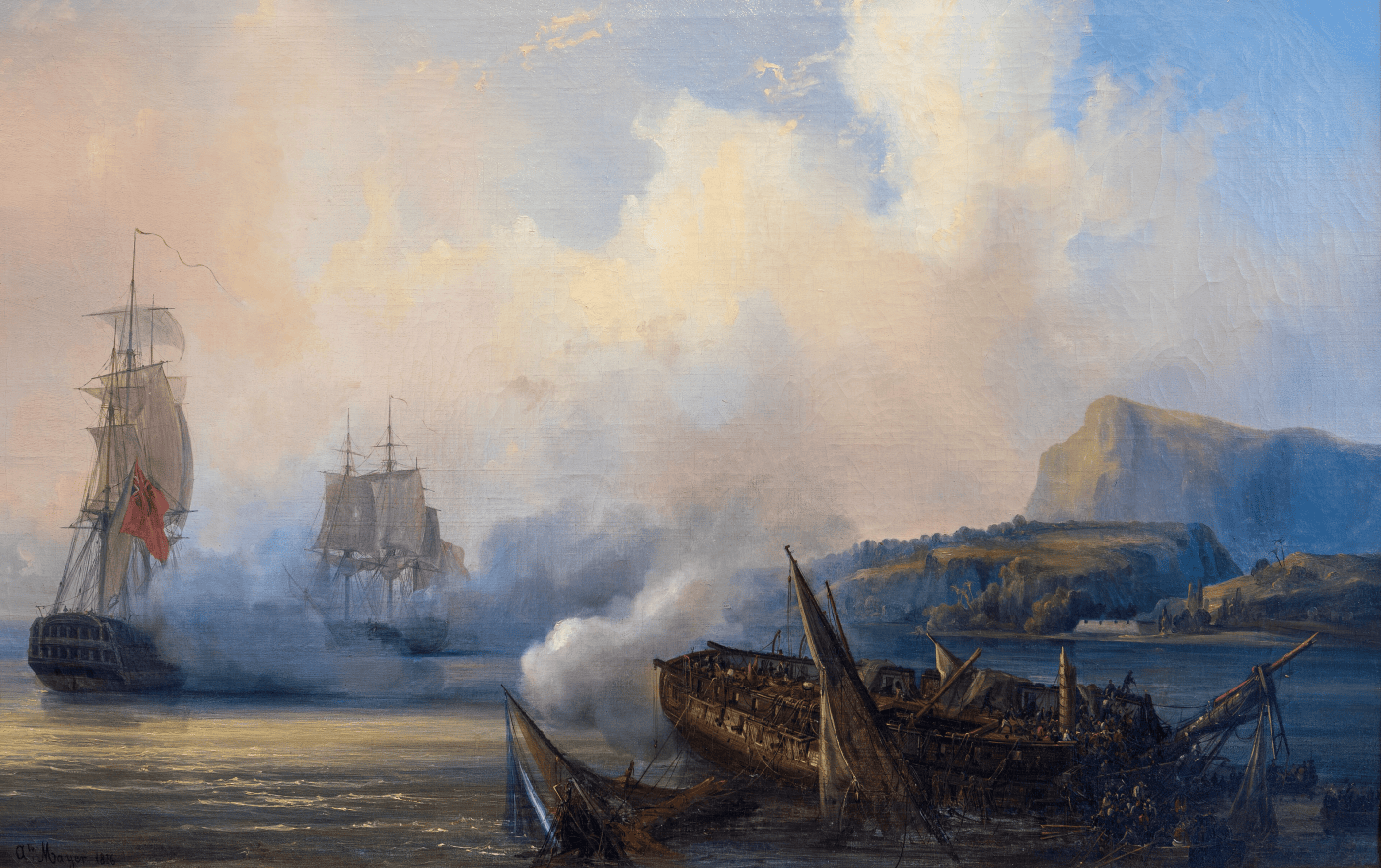
During my recent stay on the island of Mauritius, the vast expanse of the Indian Ocean struck me deeply on a warm Monday evening. Port Louis, the island’s capital on the west coast, provides excellent shelter against the dominant eastern trade winds, which guide sea traffic from the Indian Ocean toward South Africa and beyond. Summery evenings can be pretty hot and humid, marked by occasional tropical rain showers. On one hot December evening in 1799, Mauritius’s west coast gave a false sense of security to one French frigate, the 44-gun Preneuse, which became trapped at the mouth of the nearby Tombeau River. Two large British ships closed in on the French vessel, determined to reduce the last remaining major enemy warship in the Indian Ocean. This was the fateful climax of a long and eventful cruise by the French frigate, commanded by one of France’s finest naval officers, Jean-Marthe-Adrien l’Hermite.
Historical Background: Undermining British India
“The colony thus quite literally fuelled the musket volleys and cannon broadsides Britain needed to knock France out of the power contest.”
It is quite astonishing to think that for over two decades, Britain found itself in a state of constant war with France. This seemingly endless conflict must have put a serious strain on the kingdom’s finances. One wonders how the country was even able to afford the continuous maintenance of a standing army and a massive Royal Navy, as well as provide its allies with vast sums of money to keep them in the fight. One important part of the answer lies in the extreme wealth extracted from British India. The taxation of the subcontinent’s numerous inhabitants and the income from the East India Company’s lucrative trading enterprises handsomely filled the general coffers. Furthermore, India was Britain’s foremost supplier of saltpetre, one of the key ingredients of gunpowder. The colony thus quite literally fuelled the musket volleys and cannon broadsides Britain needed to knock France out of the power contest.
France was well aware of the subcontinent’s importance for Britain’s war effort. The government in Paris therefore energetically attempted to undermine its enemy’s authority in India in various ways. Local dynasts were stirred up against the British, letters of marque were handed out to privateers to disrupt the trade, and Napoleon even made a grand-scale, though ultimately failed, attempt to conquer India through Persia from a projected power base in Egypt. This proved to be France’s first and final attempt at an outright conquest of India. Although Napoleon’s hopes of treading in Alexander the Great’s footsteps had evaporated in the hot sands of the Middle East, France was still determined to hurt British India.
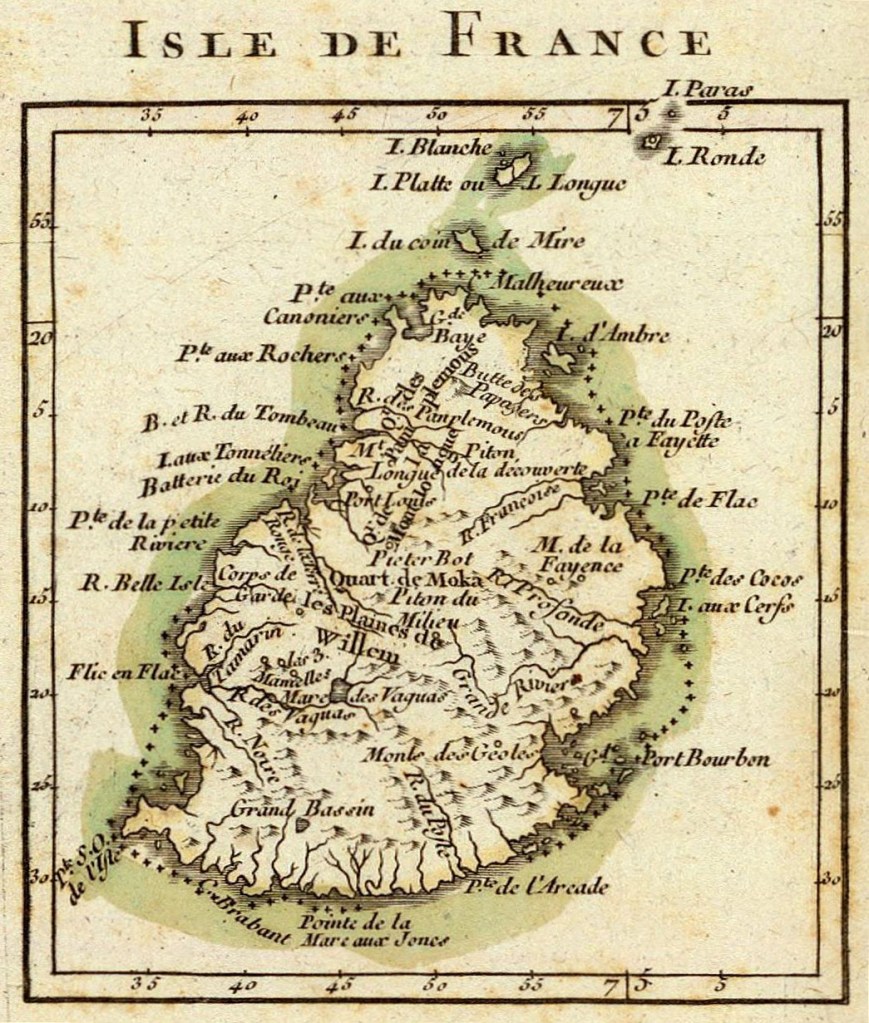
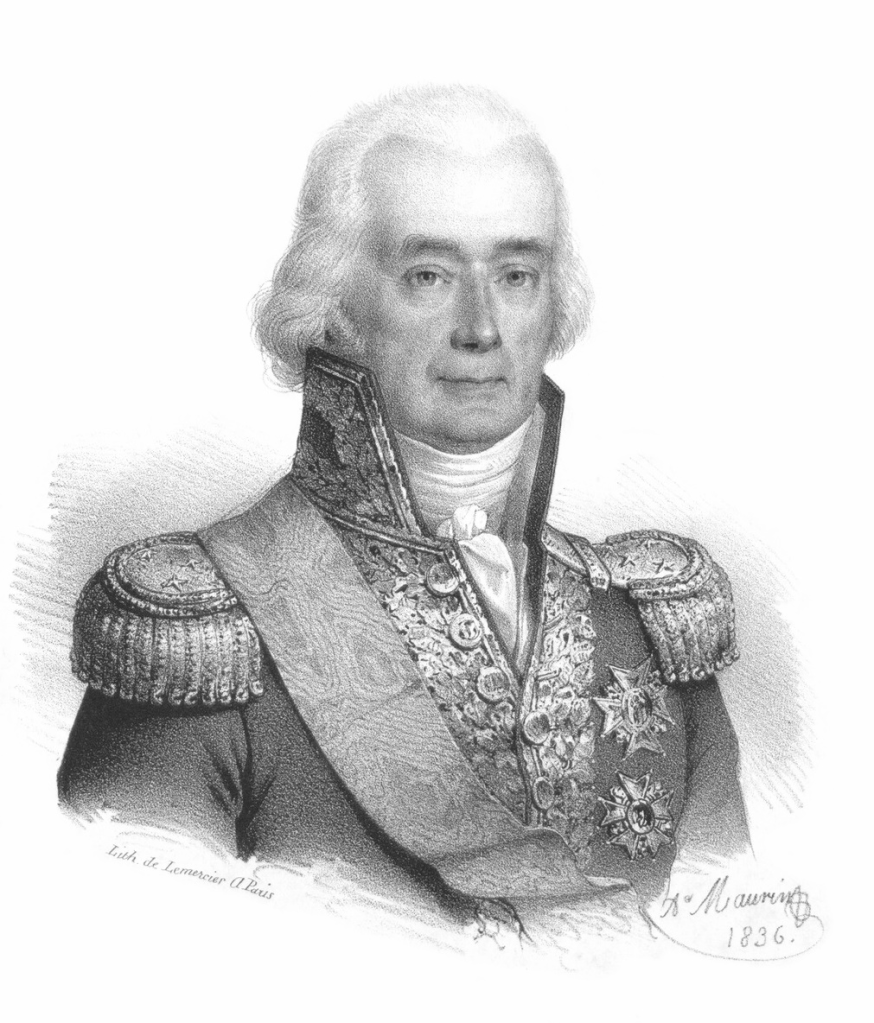
In 1796, Counter-admiral Pierre César Charles de Sercey was dispatched to the Indian Ocean with a force of six frigates, ordered to attack British interests there. De Sercey operated mainly from Port Louis, Isle de France (modern-day Mauritius), France’s foremost naval base in the region. Lying some 1,900 kilometres (1,180 miles) from the African coast, the island was ideally situated to intercept British merchant ships travelling from India to Europe. De Sercey was to make his presence known throughout the whole Indian Ocean, embarking on expeditions which took him to the East Indies and India itself. The French flotilla’s operations did not amount to much, however, and gradually more and more ships were detached and sent home.
The Frigate Preneuse
One of de Sercey’s most significant and last remaining vessels was the Preneuse. This large 44-gun frigate was fresh off the stocks, having been built in 1794 at Rochefort. With a length of 47.8 m (156 ft 10 in), a beam of 11.9 m (39 ft 1 in) and a draught of 5.8 m (19 ft 0 in), she required a crew of around 300 men. Her armament consisted of twenty-eight 18-pounder long guns and twelve 8-pounder long guns. After entering service, the Preneuse was rapidly assigned to the Indian Ocean station. There she operated from Port-Nord-Ouest, the Revolutionary name for what was originally Port Louis. She was initially commanded by Captain Ravenel, before coming under the command of the famous Jean-Marthe-Adrien l’Hermite.
Jean-Marthe-Adrien l’Hermite, the “Brave”
Jean-Marthe-Adrien l’Hermite was born in 1766 at Coutances, the son of a Norman legal counsellor active in the Cotentin Peninsula. He joined the French navy in 1780 at the age of 14, initially serving on board a coast guard cutter in the Channel and earning widespread acclaim for his role in the capture of a British privateer off Chausey. The young man afterwards joined the 74-gun Northumberland as a volunteer, seeing action in the famed and decisive Battle of the Chesapeake and the French capture of Saint Kitts and Nevis.
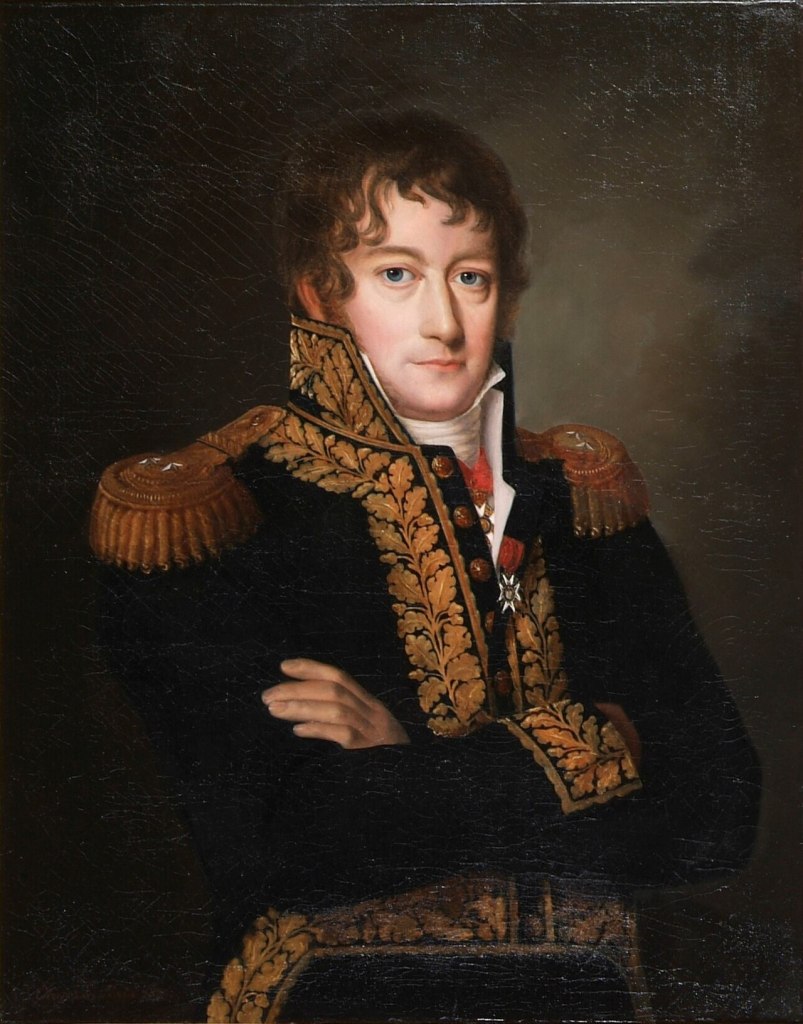
When war broke out between Revolutionary France and Britain, l’Hermite, who had exchanged his loyalty to the crown for the Revolution, engaged in commerce raiding in the Channel before receiving his first command: the Tamise, a frigate captured from the British. At the helm of this ship, l’Hermite proved his worth, capturing a staggering number of over 60 prizes in two patrols. The frigate was then attached to the Montagne, the 118-gun first-rate flagship of Villaret de Joyeuse of the Brest squadron. As such, he fulfilled the vital role of ferrying messages between the admiral and his captains during the famed Glorious First of June in 1794. This was the war’s first major naval encounter between the two nations: a tactical British victory, but a strategic French triumph, as it allowed the French grain ships to arrive safely in a starving Jacobin France.
L’Hermite then returned to the job in which he revelled the most: commerce raiding. This time he led a squadron of frigates from the 38-gun Seine off the coast of Ireland, capturing some 80 small vessels. His orders then carried him north to Scandinavia, where, together with the Galathée, he hunted British merchant vessels. This cruise proved less successful, as he came home with only three prizes, and alone, the accompanying Galathée having been wrecked in a storm off Penmarch, Brittany.
L’Hermite’s Exploits in the Indian Ocean
Given his skill in commerce raiding, it was a logical decision by the French command to dispatch l’Hermite to the Indian Ocean to form part of de Sercey’s squadron at Isle de France. He sailed for the humid waters off East Africa in the frigate Vertu. He subsequently saw action in various small engagements, including the inconclusive battle off Sumatra on 9 September 1796 between de Sercey’s frigates and two British ships of the line commanded by Richard Lucas. In 1798, l’Hermite ascended the quarterdeck of his new command, the Preneuse.
“Bored by the inaction of diplomacy, l’Hermite cleared the decks for action, ignoring his orders to carry out the mission with subtlety.”
As captain of the Preneuse, l’Hermite’s first assignment, in March 1798, was to transport messages of support and 86 military volunteers to the Sultanate of Mysore, then ruled by Tipu Sultan (r. 1782–1799), as part of a mission to seal an anti-British alliance between France and the southern Indian principality. Secrecy was of the utmost importance, lest l’Hermite’s presence alert the British. However, off the harbour of Tellicherry on the Malabar Coast, l’Hermite encountered two British East Indiamen, the Woodcot and the Raymond. Bored by the inaction of diplomacy, l’Hermite cleared the decks for action, ignoring his orders to carry out the mission with subtlety. A fight which lasted an hour resulted in the capture of both British vessels, despite the Preneuse’s mainmast suffering serious damage from a lightning strike. The encounter, however, had far-reaching consequences, as it led to the breakdown of Anglo-Mysore relations and a subsequent war between the two powers, resulting in the demise of the Sultanate of Mysore. L’Hermite’s temper had cost the French an opportunity to prevent British control over the south of India.
One of his next missions consisted of patrolling the Chinese seas together with the Brûle-Gueule and a Spanish squadron commanded by Ignacio María de Álava. The Spanish-French force attacked an East India Company convoy which had assembled in the Pearl River, South China, in January 1799. However, during the encounter, dubbed the Macau Incident, the French and Spanish forces were driven off by the British escorts. Upon returning to Isle de France empty-handed, he was met by a British blockading squadron of three ships of the line. The power of their broadsides was outside the French frigates’ league, and l’Hermite retreated into the Rivière Noire District until the enemy withdrew three weeks later.
At this point, de Sercey’s squadron was reduced to just the Brûle-Gueule and the Preneuse, the other four frigates having either been lost in battle or returned home to France. De Sercey was forced to allow further bloodletting of his once mighty frigate force, as the Brûle-Gueule was ordered to sail home with political prisoners aboard. She was doomed, however, as she was driven onto the rocky promontory of Pointe du Raz, Brittany, with heavy loss of life.
“L’Hermite’s temper had cost the French an opportunity to prevent British control over the south of India.”
The Battle of Algoa Bay and the Engagement with HMS Jupiter
De Sercey was not easily discouraged and made do with what he had, sending l’Hermite to the coast of Southeast Africa on 4 August to raid British shipping sailing to and from British India. On 20 September, the Preneuse encountered a British squadron lying at anchor in Algoa Bay, Eastern Cape, South Africa, consisting of the 24-gun naval storeship HMS Camel, the 16-gun HMS Rattlesnake and the schooner Surprise, with Lieutenant William Fothergill the most senior officer present. These vessels were at that moment supporting General Francis Dundas’ forces in the Third Xhosa War (1799–1803). As the British ships were unprepared for battle, having had their masts and rigging removed, the energetic captain of the Preneuse considered them easy prey and went in for the kill.
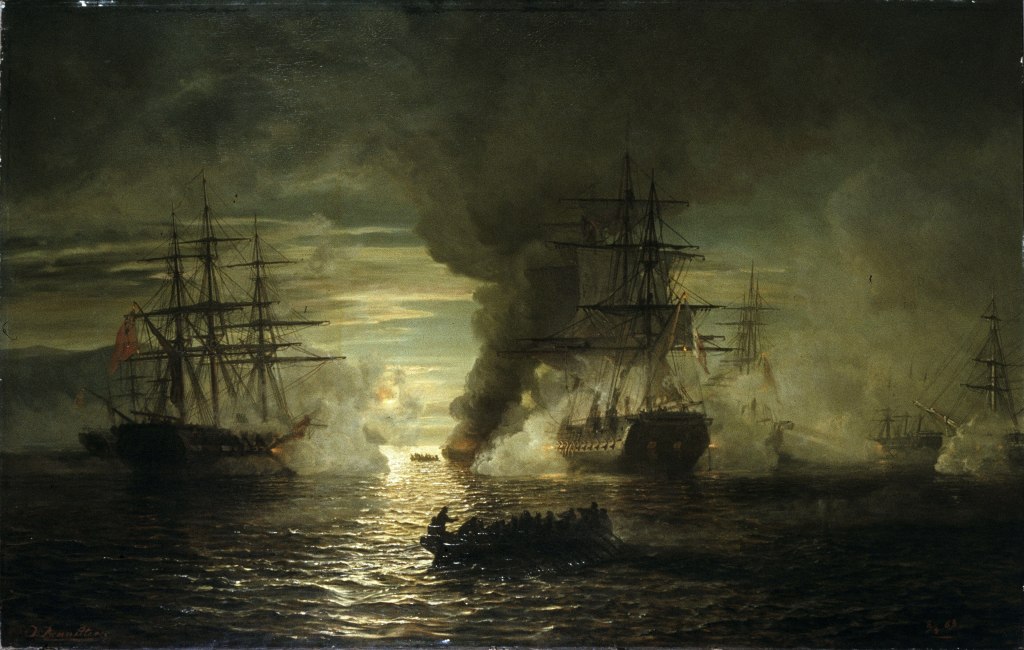
Using a ruse which would famously be repeated some two years later by Cochrane in HMS Speedy, l’Hermite crept within range under false Danish colours. Around 18:00, the Camel’s boat was lowered into the water to inspect the incoming vessel. Quickly unmasking the enemy’s guile, the Camel fired warning shots close to the approaching French frigate. The anchored British squadron prepared for battle, and around 20:30 the first broadsides could be heard thundering throughout the bay, as the Preneuse first singled out the Rattlesnake. When the Camel came to the sloop’s aid, l’Hermite focused his fire on the storeship. By midnight, several shot from the Preneuse had pierced the Camel’s hull, causing distressing flooding aboard. Her crew had to abandon the guns temporarily in order to work the pumps. Believing the Camel to have given up entirely, l’Hermite then directed all his firepower toward the Rattlesnake. The exchange of fire lasted well into the night, with the Preneuse finally disengaging around 03:30. The British had suffered only minor losses, with two men killed and a further twelve wounded, although the Camel and the Rattlesnake had been badly damaged. The Preneuse fared much worse, with 40 killed and wounded amid the torn timbers of the French frigate.
The Preneuse remained in the bay until 10:00, before finally heading back out into the open sea. L’Hermite later claimed that he had done so in the belief that the schooner Surprise was a well-armed brig. It is safe to say, however, that the staunch defence of the modest British squadron had dissuaded the French captain from resuming the action. The Preneuse was simply soundly beaten.
The British promptly sent a message to Captain George Losack, the commander at the Cape, about the French attack on Fothergill’s flotilla at Algoa Bay. Losack immediately sent Captain William Granger’s HMS Jupiter (50 guns) to pursue the limping Preneuse, which was trying to make her way back to Isle de France. The faster British warship caught up with l’Hermite on 9 October, determined to give battle to the Preneuse. A strong north-westerly gale rocked both ships, which were sailing on a north-easterly course. L’Hermite had no intention of engaging the 50 guns of the Jupiter, forcing Granger into a running battle. By the evening, the Jupiter was able to open fire, with the Preneuse replying with her stern chasers. Granger soon caught up with the fleeing French warship, but the heavy swell prevented the British captain from using the heavier 24-pounder guns of his lower deck. The battle lasted throughout the night and the next two days. On 10 October at 14:00, Granger was finally able to bring the Preneuse to battle. Unable to use his heavier guns, however, the British commander in the end refrained from fighting the French ship, convinced that the 12-pounders of his upper deck were no match for the Preneuse’s main battery. Granger called off the chase and returned to Cape Town on 16 October. L’Hermite was allowed to escape … for now.
The Battle of Port Louis
L’Hermite finally sailed back to Port Louis, Isle de France, arriving on 11 December, only to find a dangerous British welcoming committee. Blockading the French naval base were Captain John Osborn’s 74-gun ship of the line HMS Tremendous and Captain William Hotham’s HMS Adamant (50 guns). Hotham was the nephew of Admiral Hotham, who had led the British forces during the disappointing (at least in Nelson’s eyes) Battle of the Hyères Islands some four years earlier. These ships had been sent specifically to deal with the Preneuse, arriving off Isle de France four days earlier, on 7 December, and capturing several enemy merchant vessels upon arrival. By the time l’Hermite arrived, Osborn and Hotham had smartly cut off the Preneuse’s escape route, forcing the French captain to sail toward the protection of the guns at the mouth of the Tombeau River and deliberately beach his ship.
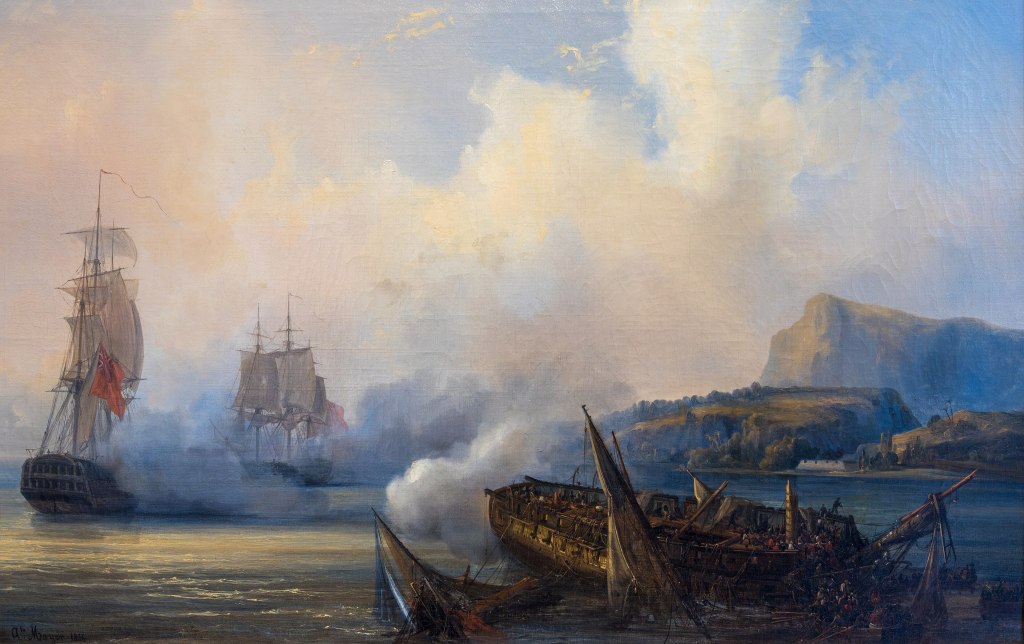
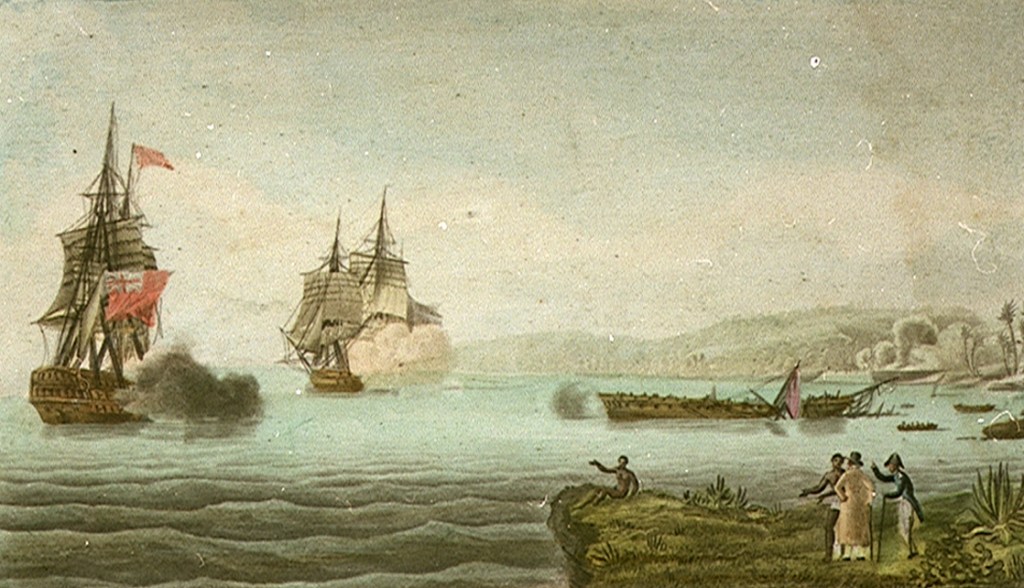
At around 15:00, l’Hermite ordered his ship’s masts to be cut away and then opened fire on the approaching Royal Navy squadron. On her approach to the Preneuse, Hotham’s Adamant carefully navigated the shoals off the Tombeau River. It took the British 50-gun ship two hours to position herself appropriately, and around 17:30 she opened fire on the stranded French vessel. After enduring a barrage of 15 minutes, l’Hermite realised that further resistance was futile, and he struck his colours at 17:45. The Preneuse was damaged beyond repair.
Hotham and Osborn were worried, however, that the French might salvage and repair the wrecked frigate for further use against the British in the Indian Ocean. Determined to end the French naval threat in the Indian Ocean once and for all, the two captains decided to launch three cutters at 20:00 under the command of Lieutenant Edward Gray to set fire to the ship. Gray reached the Preneuse at 21:00 under heavy fire from the shore battery, to find several officers and sailors still aboard her. The boarding party put the remaining men in shackles and led them off to the British squadron as prisoners of war before destroying the French ship. Among the prisoners was l’Hermite himself, who was treated with the respect befitting a man of his rank and allowed to take his personal belongings with him. Not one single British sailor was lost in Gray’s operation.
“After seeing his last ship go up in flames, de Sercey, bereft of any warship to command, sailed back to France, where he retired.”
De Sercey had witnessed the Preneuse’s last stand from the shore. After seeing his last ship go up in flames, de Sercey, bereft of any warship to command, sailed back to France, where he retired. The last French warship in the Indian Ocean was gone, and with it a great nuisance to the Indian Ocean trade routes. The French still preyed on British shipping through privateers, but no major warship threatened the Indian trade again until the short-lived cruise of the frigate Chiffonne in 1801, which was quickly intercepted and captured at the Battle of Mahé. The Peace of Amiens in 1802 gave the French some breathing space, and they quickly reinforced Isle de France before the outbreak of the Napoleonic Wars. How the British dealt with the French naval revival in the Indian Ocean is, however, the subject of another article.
As for Captain l’Hermite, he was allowed to return to France during the Peace of Amiens in October 1801. Although he was criticised for the underwhelming results of his cruise off the South African coast, the French captain received a hero’s welcome from none other than Napoleon Bonaparte. The First Consul admired him for his energy and valour, subsequently dubbing the captain “the Brave”. He received the command of big ships such as the 74-gun Impétueux and the 80-gun Alexandre, before becoming the flag captain of Admiral Laurent Jean François Truguet aboard the 120-gun Vengeur. He soon fell out of favour, however, for speaking out against Napoleon’s coronation as emperor, and remained without a command for a year. He returned to action in late 1805 after his appointment as an Officer of the Légion d’honneur. The French admiralty’s renewed trust in their captain was well rewarded when l’Hermite captured around 50 ships and goods worth around 10 million francs during an 11-month cruise in the Atlantic and the Caribbean. Napoleon rewarded one of his finest commanders with a promotion to counter-admiral and the title of Baron of the Empire. He afterwards commanded the Rochefort squadron from October 1808 onwards. L’Hermite’s health was failing, however, and he was forced to resign in February 1809. In 1812, he was entrusted with the command of the Mediterranean Fleet, but his chronic illness kept him largely away from his work. L’Hermite survived the regime change of 1814 by switching his allegiance to the Bourbon dynasty, which he served loyally even during Napoleon’s Hundred Days and which rewarded him with further decorations. He retired in 1816 with the honorary rank of vice-admiral and passed away on 28 August 1826 at the age of 59. Jean-Marthe-Adrien l’Hermite easily stands out as one of France’s finest naval commanders, a constant headache to the British admiralty and worthy of special treatment here on Heart of Oak.
Olivier Goossens


Leave a Reply