The Abandoned Admiral: Brave Benbow’s Last Fight 
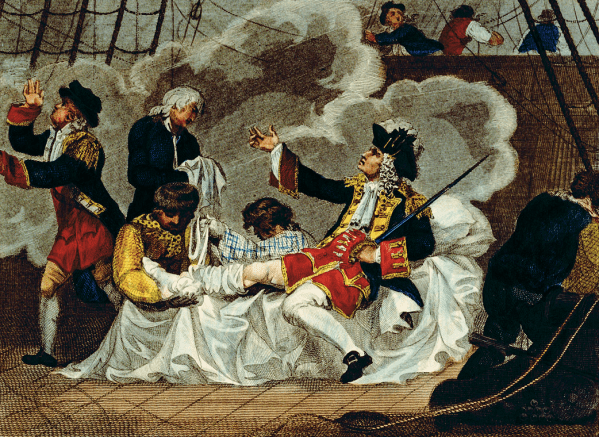
When England went to war with the Franco-Spanish alliance, led by the Bourbon royal house, the first concern of the island nation was the situation in the West Indies. Taking advantage of his kinship with the new Spanish monarch, French king Louis XIV managed to secure many trading privileges which allowed France to profit immensely from the mythical wealth of the Spanish main to the detriment of Dutch and English merchants. The Admiralty decided to commission one its most potent commanders to take care of the pressing situation across the Pond: Vice-Admiral John Benbow. For all his heroics, his campaign in the Caribbean would end in betrayal and disappointment.

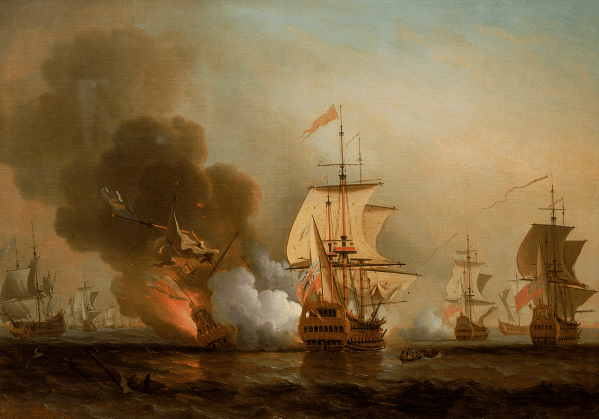
A Disappointing Triumph: Wager’s Action, 8 June 1708

"Once the pride of the Spanish Treasure Fleet, the only evidence of the stricken galleon’s existence was scattered timbers, illuminated by the last rays of the setting sun, gently brushing against one another and marking the graves of some six hundred men, now embraced by the eternity of the deep blue."

The Failed British Invasion of the Netherlands, 1673

In this piece, J.D. Davies takes a closer look at the planned English invasion of the Netherlands in 1673, which was abandoned after the Battle of the Texel. Forgotten by history, its objective was nothing less than the destruction of the Netherlands as an independent nation, and the transformation of at least one of its two principal maritime provinces into a puppet state under English control.

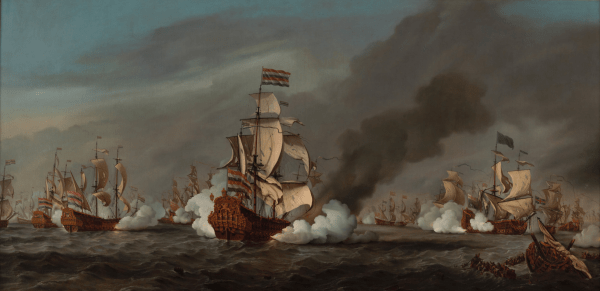
The Royal Navy’s Longest Battle in History: The Four Days’ Battle, 11-14 June 1666

The year was 1666, and the Second Anglo-Dutch War was in its second year. Between 11 and 14 June, the southern North Sea became the stage for an epic encounter between two of the greatest naval powers of the time: England and the Dutch Republic. Over four days, a fleet of 60 ships under George Monck clashed with 86 vessels commanded by Michiel de Ruyter, the scourge of Stuart England. Around 7,000 men were killed, wounded, or captured in the aftermath. Twenty-four warships were lost, multiple admirals perished, and one was even taken prisoner. This is the story of the longest battle ever fought by the Royal Navy.

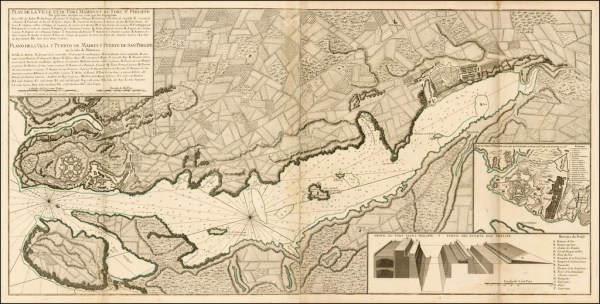
Cementing British Naval Dominance in the Mediterranean: The Capture of Minorca (September 1708)

After the failed siege of Toulon, the Royal Navy was still in need of a proper naval base in the Mediterranean. This need became even more pressing when the Allied position in Spain was compromised following the Battle of Almansa. On 25 April 1707, the Duke of Berwick inflicted a crushing defeat on the combined English, Dutch, and Portuguese army in the Iberian Peninsula, reducing their presence to Catalonia. As a result, securing Catalonia for Archduke Charles—now King Charles III of Spain—became the new priority for the Alliance.  However, the Allied forces in and around Barcelona were struggling with severe provisioning issues. Establishing a permanent naval base in the western Mediterranean was seen as essential to ensuring the steady flow of troops and supplies to the Spanish front. Port Mahon, Minorca, emerged as the preferred target.

How the Royal Navy Helped Seize and Secure Barcelona (1705-1706)

Over time, growing numbers of Spaniards began expressing their discontent with the new Bourbon monarchy. In Catalonia especially, opposition to the Sun King’s grandson became increasingly vocal. Sensing this unrest in Barcelona and its surrounding countryside, the Allies sought to use it to their advantage. High command became determined to seize this crucial city from the Bourbons, believing that its capture could inspire other regions to rise against the central authority in Madrid. Despite a previous failure to establish a foothold in Barcelona, the Allies were now prepared to make another attempt.

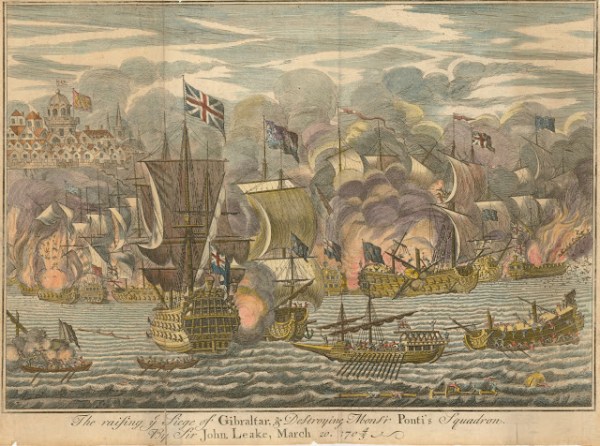
Admiral of the Fleet Sir John Leake (1656-1720)

After the fierce Battle of Málaga on 24 August 1704, Admiral Rooke sailed home with much of his fleet, desperately in need of repairs. Consequently, Sir John Leake assumed command of the Anglo-Dutch naval forces off the Iberian Peninsula. He would go on to make a name for himself, playing a crucial role in the Grand Alliance's subsequent naval operations during the war.

Create a website or blog at WordPress.com

Up ↑