
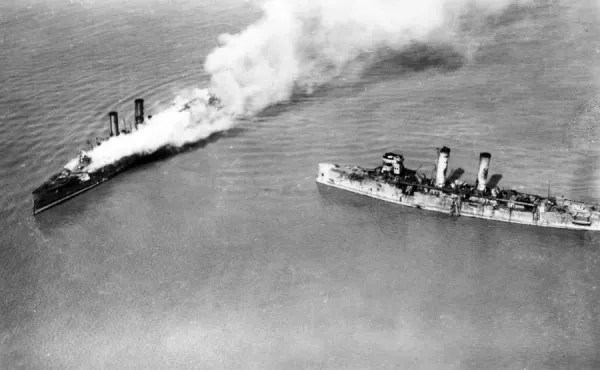
On the night of 23 to 24 April 1918, the Royal Navy launched assaults on the Belgian port cities of Ostend and Zeebrugge. While the Zeebrugge Raid gained fame due to the heroics of the marines aboard the Vindictive, the operation against Ostend has largely been forgotten.
Ever since its capture by German forces during the early stages of the Great War, Bruges served as an important base for the German navy. The city was connected by canals to the coastal towns of Ostend and Zeebrugge and its inland location protected it from bombardment by land and sea, while air attacks were still in their infancy and posed no significant threat. As a result, the Germans established extensive training and repair facilities in the Flemish city, supporting several flotillas of destroyers, torpedo boats, and U-boats.
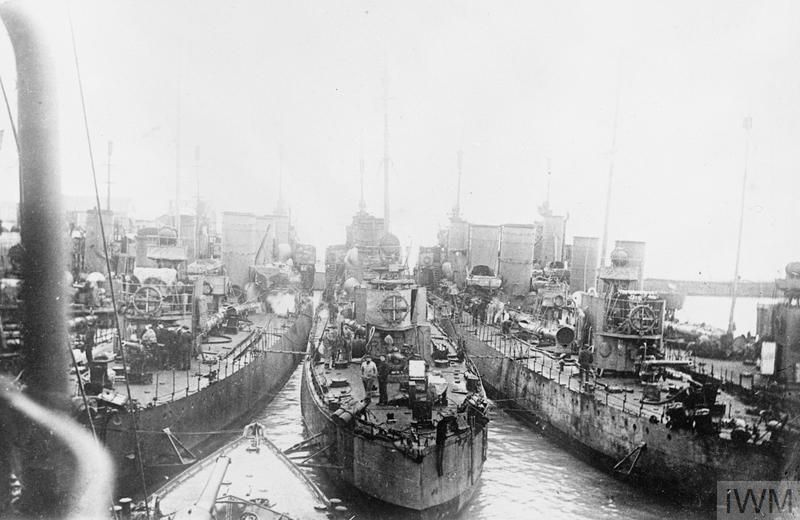
In 1916 and 1917, the U-boats operating from Flanders formed a central element of Germany’s campaign of unrestricted submarine warfare, posing a serious threat to shipping routes in the Channel and the North Sea. An early attempt to cut off these German naval units from the sea was made by Admiral Reginald Bacon’s monitors, which unsuccessfully tried to destroy the lock gates at Ostend. By early 1918, the Admiralty was pursuing increasingly radical measures to counter the threat of unrestricted submarine warfare, including directing the Allied Naval and Marine Forces department to develop plans for attacks on U-boat bases in Belgium.
“In 1916 and 1917, the U-boats operating from Flanders formed a central element of Germany’s campaign of unrestricted submarine warfare, posing a serious threat to shipping routes in the Channel and the North Sea.”
The Allied Naval and Marine Forces was a newly formed department tasked with conducting operations along the German-held coastline. It was commanded by Admiral Roger Keyes, with Commodore Hubert Lynes serving as his deputy. The department had access to substantial resources from both the Royal and French Navies.

A plan was agreed to attempt to block to harbor entrances of both Zeebrugge and Ostend. The main force under Keyes was destined for Zeebrugge, while a smaller force under Lynes headed for Ostend. The plan was to scuttle the obsolete cruisers, HMS Sirius and Brilliant, at the canal which emptied at Ostend.
The attack was to take place at night and coincide with the raid on Zeebrugge. The Inshore Squadron, tasked with executing the blockade, was supported by a mix of monitors and destroyers that provided covering fire from a distance, along with artillery positioned at Ypres. Meanwhile, flotillas of motor launches, small torpedo boats, and Coastal Motor Boats were to lay down a smoke screen under whose cover the two cruisers could advance toward the Flemish harbor. The crews of the blockships were then to be recovered by these fast-moving flotillas.
The assaults on Zeebrugge and Ostend were launched on 23 April after two delays caused by poor weather. The Ostend force arrived just before midnight, with monitors positioned offshore and small craft laying smoke. The monitors fired on German defenses, including the powerful 11-inch “Tirpitz” battery, while the cruisers advanced, searching for the marker buoys through the tricky sandbanks scattered along the Belgian coast.
Then things went terribly wrong for the advancing Inshore Force. Strong winds blew the smoke screen into the cruisers’ faces, blinding their commanders who had to navigate by dead reckoning. The same wind then revealed them to German defenders, who opened heavy fire on the blockships. Despite casualties, the crews pressed on, searching for the Stroom Bank buoy guiding ships into the canal.
“Then things went terribly wrong for the advancing Inshore Force. Strong winds blew the smoke screen into the cruisers’ faces, blinding their commanders who had to navigate by dead reckoning.”
Commander Alfred Godsal in HMS Brilliant led the assault but soon encountered a German countermeasure. As Brilliant neared the buoy under heavy fire, she ran aground in deep mud outside the harbor. The following cruiser, HMS Sirius, collided with Brilliant, both blockships now stuck in a tangle of wreckage. Under fire, crews evacuated as scuttling charges were set to sink the blockships in place.
The destroyers of Lynes’ force covered the retreat while the monitors continued firing. Godsal was the last to be rescued, taken aboard launch ML276. The attack ended in complete failure, and the ships returned to Dover and Dunkirk empty handed. The main cause of the Allied debacle was the German commander’s cunning: anticipating a nighttime raid, he moved the navigation buoy 2,400 yards east into the sandbanks, effectively dooming the entire operation from the outset. Admiral Keyes respected the German’s cleverness, later describing it as a “legitimate ruse of the enemy.”
“The main cause of the Allied debacle was the German commander’s cunning: anticipating a nighttime raid, he moved the navigation buoy 2,400 yards east into the sandbanks, effectively dooming the entire operation from the outset.”
Meanwhile, the raid against Zeebrugge to the east fared somewhat better, causing serious concern among the German high command. The larger ships of the Bruges fleet, in fact, were no longer able to leave port. However, German submarines still managed to slip past the British blockships.
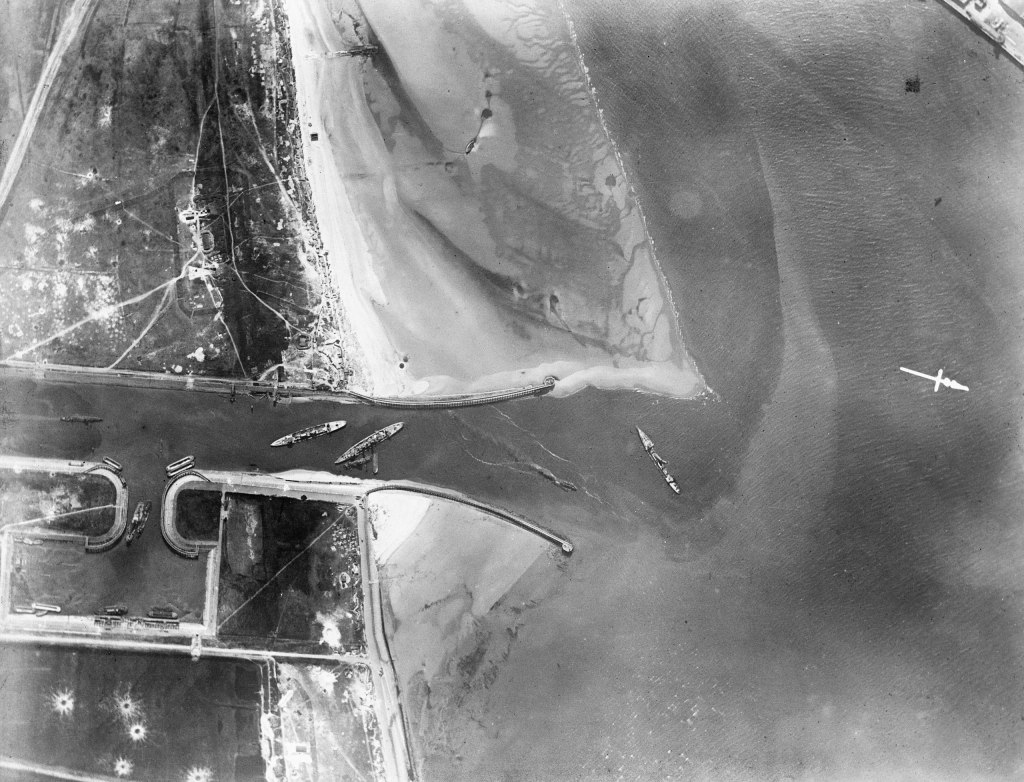
Later, a second operation was launched against Ostend, featuring the legendary sacrifice of the Vindictive. The raid was more successful than the first but still failed to completely close off Bruges from the sea. The Flemish city continued to operate as a naval base until its conquest by Allied soldiers in October 1918.
Olivier
 Heart of Oak
Leave a comment