

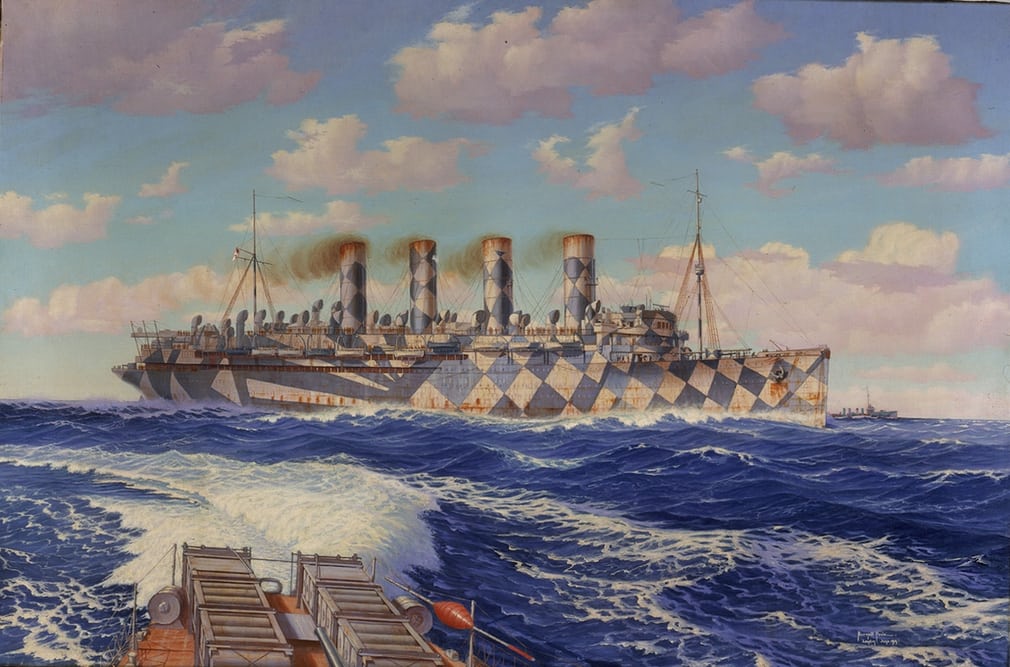
The narrative of the Great War at sea often conjures images of dreadnoughts clashing in the North Sea, the relentless menace of U-boats, and the heroic, albeit ultimately tragic, saga of Jutland. While the Royal Navy’s combatant fleet undeniably played a pivotal role in maintaining Britain’s maritime supremacy, a less heralded yet equally vital component of its wartime structure was the Naval Transport Service. This often-overlooked arm, largely comprised of commandeered merchant vessels, formed the silent lifeline that sustained the Allied war effort, transporting millions of troops, wounded personnel, and essential supplies across vast distances. To truly comprehend the scale and impact of the Royal Navy’s contribution, we must delve into the crucial and multifaceted role of its merchant fleet force during World War I.
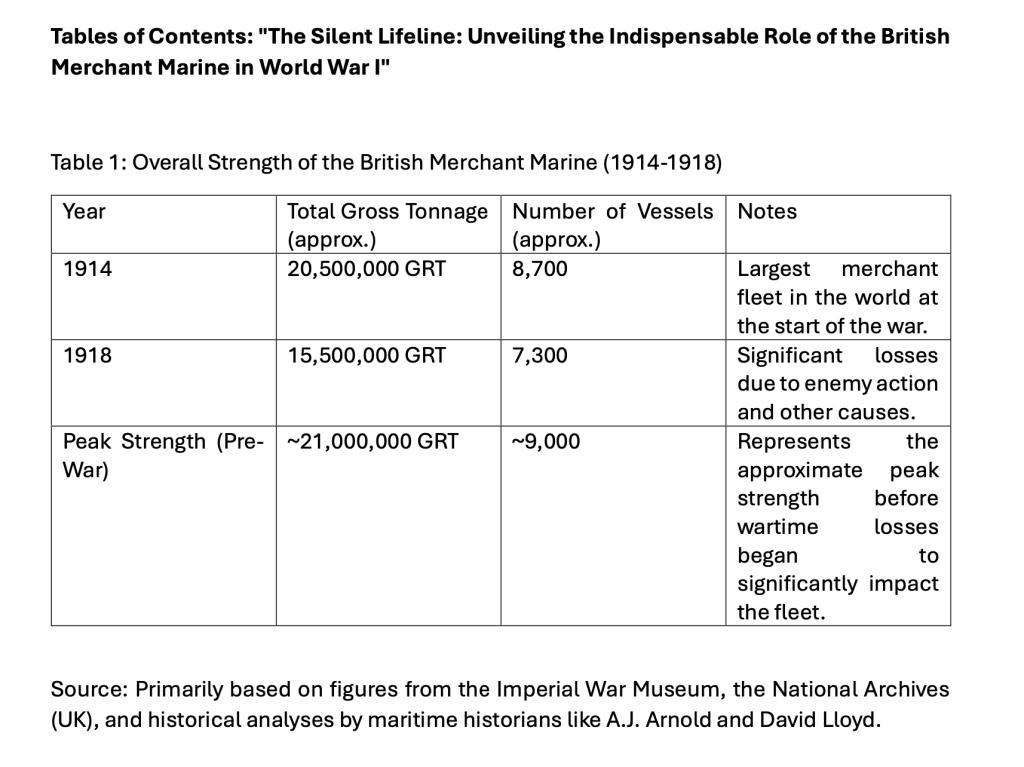
Prior to 1914, Britain possessed the world’s largest and most diverse mercantile marine. This vast fleet, ranging from humble coastal steamers to grand transatlantic liners, became the indispensable foundation upon which the Naval Transport Service was built. As the war engulfed Europe, the Admiralty swiftly recognized the imperative of mobilizing this resource. According to historian Arthur J. Marder, in his seminal work From the Dreadnought to Scapa Flow, the initial reliance on the merchant fleet for transport was immediate and substantial (Marder, 1965). These civilian ships, often manned by their original crews under the direction of naval authorities, were rapidly adapted to meet the exigencies of a global conflict.
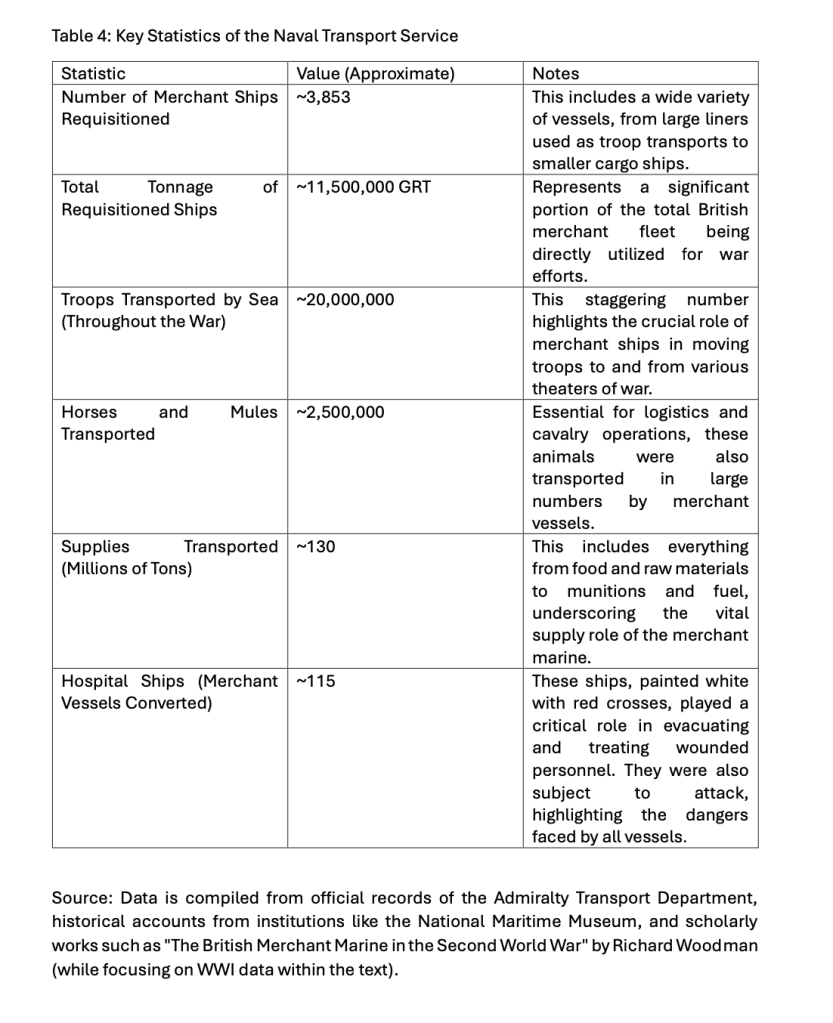
One of the most significant functions of the Naval Transport Service was the movement of troops on an unprecedented scale. The British Expeditionary Force (BEF), dispatched to France in August 1914, was transported almost entirely by merchant ships. Vessels like the Aquitania, Mauretania, and Lusitania, normally engaged in luxury transatlantic voyages, were transformed into high-capacity troopships, capable of carrying thousands of men in a single crossing. As the war progressed and the scale of fighting intensified, the demand for troop transport grew exponentially. Historian Nicholas A. Lambert, in Planning Armageddon: British Economic Warfare and the First World War, highlights the logistical complexities of moving millions of soldiers to various theaters of war, from the Western Front to Gallipoli and the Middle East (Lambert, 2012). The efficiency and sheer capacity of the commandeered merchant fleet were critical in ensuring the timely deployment and reinforcement of Allied forces. Without these vessels, the ability of Britain and its empire to project military power across the globe would have been severely crippled.
Beyond the transportation of fighting men, the Naval Transport Service played an equally crucial humanitarian role through its hospital ships. These vessels, often distinguished by their white hulls and prominent red crosses, were converted merchant ships dedicated to the evacuation and treatment of wounded soldiers and sailors. According to the Imperial War Museum, by the end of the war, over 150 merchant ships had been converted into hospital ships, operating in all major theaters (Imperial War Museum, n.d.). These floating hospitals, staffed by dedicated medical personnel, provided essential care and a degree of comfort to countless casualties. The dangers faced by these ships were significant; despite their protected status under international law, they were sometimes targeted by enemy submarines, as tragically illustrated by the sinking of the HMHS Llandovery Castle in 1918. The courage and resilience of the crews and medical staff on these hospital ships exemplify the profound human dimension of the Naval Transport Service’s contribution.
Furthermore, the role of the merchant fleet extended far beyond the movement of personnel. These vessels were the workhorses of the war effort, responsible for transporting vast quantities of vital supplies, including food, fuel, ammunition, and raw materials. The Royal Navy’s combatant fleet itself relied heavily on colliers and tankers drawn from the merchant service to maintain its operational readiness. As Paul Halpern notes in A Naval History of World War I, the ability of the Royal Navy to sustain its blockade of Germany was in no small part due to the efficient logistical support provided by the merchant fleet (Halpern, 1994). The constant flow of supplies across the seas was essential for both the military and the civilian population, and the Naval Transport Service ensured that this flow continued despite the growing threat of German U-boats.
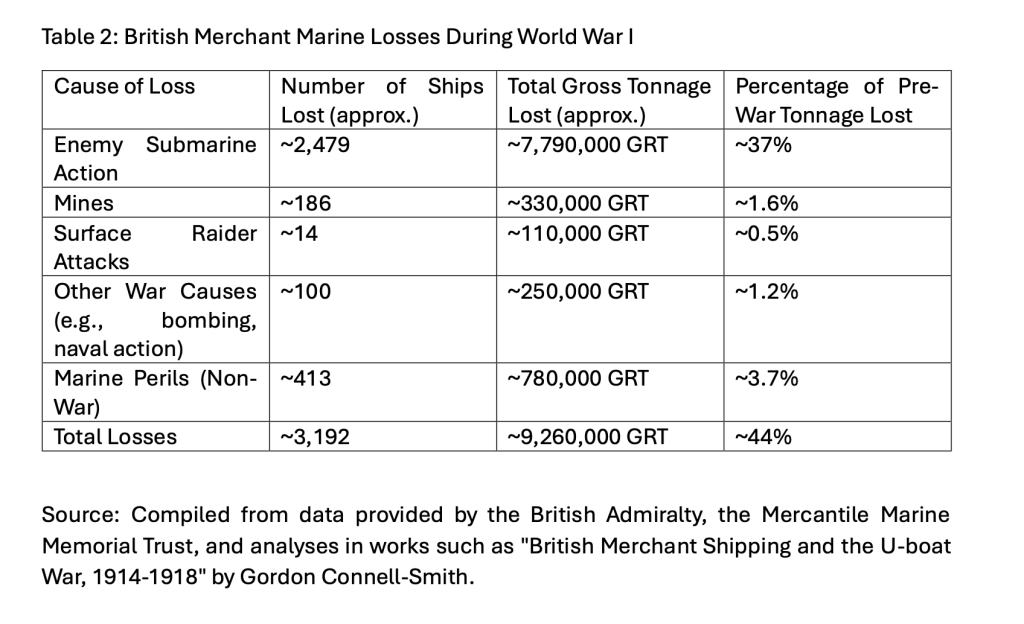
The challenges faced by the Naval Transport Service were immense. German submarine warfare, which intensified throughout the war, posed a constant threat to merchant shipping. Hundreds of transport vessels were sunk, resulting in significant loss of life and material. The strain on the merchant fleet was further exacerbated by the increasing demands of the war effort and the need to replace lost tonnage. Despite these challenges, the Royal Navy’s Naval Transport Service, drawing upon the resilience and adaptability of the British merchant marine, consistently delivered.
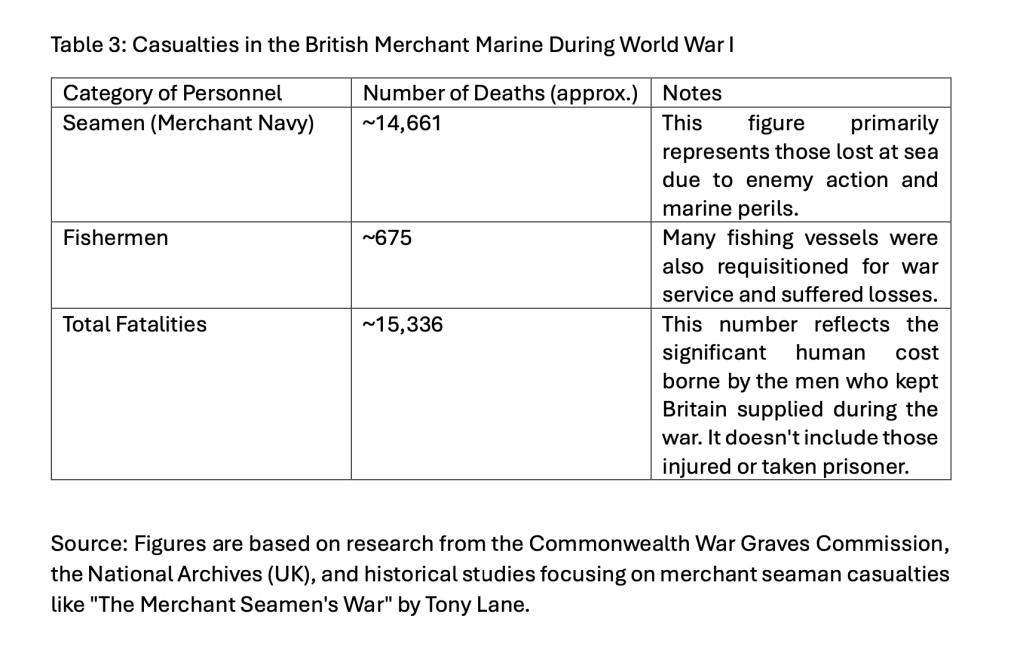
In conclusion, while the battleships and cruisers of the Royal Navy captured the popular imagination during World War I, the often-unseen work of the Naval Transport Service was absolutely fundamental to the Allied victory. The commandeered merchant fleet, acting as troopships, hospital ships, and supply vessels, provided the essential logistical backbone for the war effort. From the initial deployment of the BEF to the evacuation of the wounded and the sustenance of the British war machine, the contribution of the merchant fleet under the aegis of the Royal Navy was indispensable. The sacrifices made by the men and women who served on these vessels, often facing perilous conditions, should not be forgotten. The silent lifeline provided by the Naval Transport Service remains a testament to the vital and multifaceted role of sea power in modern warfare.
Hangar 401
Sources:
- Halpern, P. G., A Naval History of World War I, 1994.
- Lambert, N. A., Planning Armageddon: British Economic Warfare and the First World War, 2012.
- Marder, A. J., From the Dreadnought to Scapa Flow, Vol. II: The War Years: To the Eve of Jutland, 1914-1916, 1965.
 Heart of Oak
Leave a comment