
HMS York was the lead ship of a class of two heavy cruisers, which met her demise at the presumed safety of Suda Bay, Crete. This is her story.
Heavy Cruiser HMS York (90)
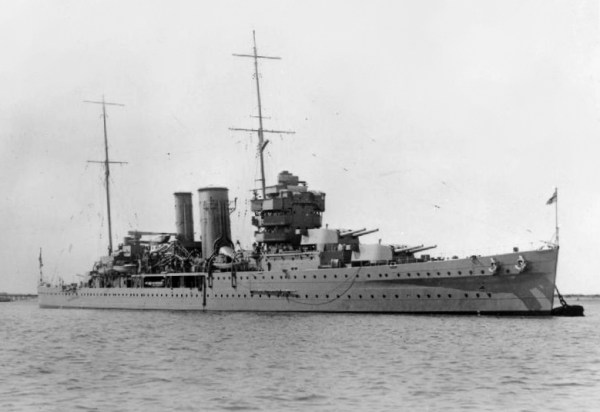
HMS York was the lead ship of a class of two heavy cruisers, which met her demise at the presumed safety of Suda Bay, Crete. This is her story.

Naval architect and historian David K. Brown observed: “It seems likely that in the quest for weight saving, the structure was not quite strong enough.”Unlike her sister Nelson, which exceeded her machinery weight specifications, Rodney’s lighter machinery caused persistent problems.

"The ship sank, taking 11 crewmembers with her to the bottom of the sea. The valiant little ship didn't go down without a fight, shooting down one Ju 87 before she herself made her final bow and disappeared below the waves."

HMS Rorqual was a Grampus-class submarine that primarily served in the Mediterranean during the Second World War. Like her five sister ships, she was specialized in minelaying. However, the Grampus-class submarines also played a crucial role in supplying the besieged island of Malta. Tragically, only one of them, HMS Rorqual, survived the war. She is considered the most successful minelaying submarine of the conflict, having singlehandedly sunk 57,704 GRT of enemy shipping—35,951 of which were destroyed by her mines.

This man was as crucial to the Allied victory as Field Marshal Montgomery. Between 1942 and 1945, he developed aggressive tactics to combat Germany’s U-boat menace. A modest yet confident man, he always maintained a professional distance from his employees. Nevertheless, all who worked for him came to respect and trust his decisions. This is the life of Max Horton.

HMS Indefatigable was one of the Royal Navy's two Implacable-class aircraft carriers, ordered by the Chamberlain government as a response to Germany and Italy's rearmament. Her design was basically an improved version of the Illustrious-class.

After the French surrendered on 22 June 1940, a significant power vacuum emerged in the Mediterranean. The British had lost their principal ally in the region and now faced Axis threats alone. This created a precarious situation, as the Mediterranean was a vital trade route connecting Britain to the Far East. To safeguard commerce flowing between Suez and Gibraltar, a special naval force was established. This is the story of Force H.

The Leander-class was a group of eight light cruisers built for the Royal Navy during the 1930s, which saw extensive service during the Second World War.

HMAS Australia had a storied career that began relatively calmly but culminated in intense battles against the forces of Imperial Japan.

On 10 June 1940, Benito Mussolini decided to enter the war on Hitler’s side. Suddenly, an entirely new front opened up for the Royal Navy and its allies in the Mediterranean. The formidable Italian fleet posed a significant threat to British interests in the region, with most of the Far East trade passing south of Italy via the Suez Canal. It did not take long before the two powers clashed at sea. On 28 November, a British-Australian force consisting of five light cruisers from the 7th Cruiser Squadron surprised three Italian destroyers off Crete.
 Heart of Oak