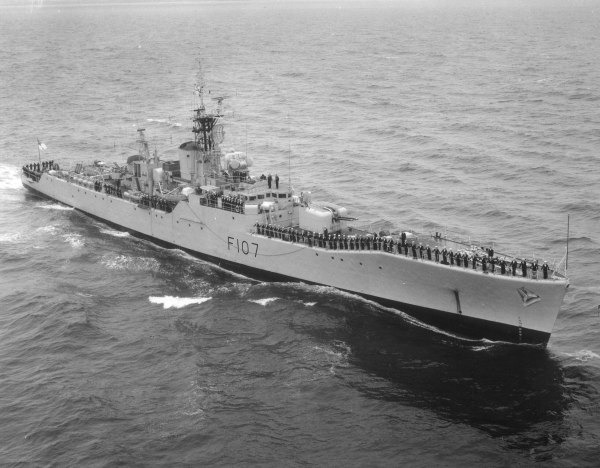
ASW Frigate HMS Rothesay (F107)

HMS Rothesay (F107) was the lead ship of her class of ASW frigates (Type 12M), which were an improvement of the previous Whitby-class (Type 12). This article focuses on her design, with special attention to her major '66/67 refit, and a brief overview of her career.

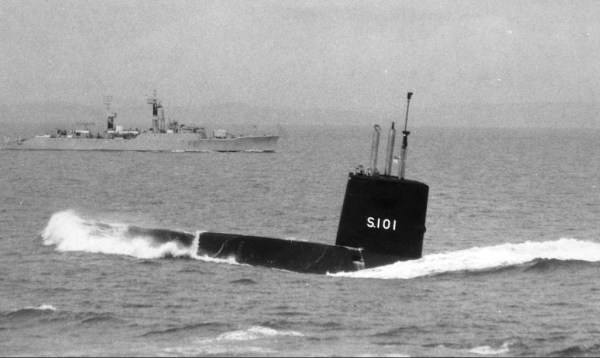
Britain’s First Nuclear-Powered Submarine: HMS Dreadnought (S101)  

Britain had been entertaining the idea of converting its submarine fleet into a nuclear-powered force since 1946. Work was suspended indefinitely in October 1952, however. During exercises with the experienced ASW units of the Royal Navy, the first U.S. nuclear-powered submarine, USS Nautilus, quickly convinced the First Lord of the Admiralty, Lord Mountbatten, of its superiority. He therefore decided to resume the development of a nuclear-powered submarine...

Operation Musketeer: Retaking the Suez Canal, 1956

In July 1956, the anti-imperialist leader Gamal Abdel Nasser ordered the nationalization of the Suez Canal Company, a joint British-French enterprise that had controlled this vital link between East and West since its construction in 1869. Britain had extensively used the canal to build and maintain its vast empire. The Egyptian president, however, sought to completely expel British and French influence from the region. The two European powers, fearing that this move might encourage other anti-imperialist movements in the Middle East, decided to intervene militarily. A vast Anglo-French task force was assembled to counter Nasser.

HMCS Ontario (C53): A Career in Diplomacy

HMCS Ontario was a Minotaur-class light cruiser launched in 1943 by Harland & Wolff in Belfast. She was commissioned into the Royal Canadian Navy on 25 May 1945 as HMCS Ontario. Completed too late to participate in World War II, she nonetheless served Canada with distinction until 1958, demonstrating Canada’s commitment to the newly established world order.

HMS Eagle (R05): The Career of an Audacious-Class Aircraft Carrier 

HMS Eagle (R05), the fifteenth Royal Navy ship to bear that name, was one of two Audacious-class aircraft carriers—the largest aircraft carriers in British service during the 20th century. She became a central unit of Britain’s carrier strike force during the 1950s and 1960s, playing a role in several significant events, such as the Suez Crisis and the first large NATO naval exercise, Exercise Mainbrace.

The Sinking of the Sheffield

When Argentine dictator Leopoldo Galtieri ordered the invasion of the Falklands, he assumed the British would not retaliate. He was wrong. Prime Minister Margaret Thatcher, a woman of indomitable spirit, was resolute in her determination not to back down. A grand armada was assembled to reclaim the islands in the icy waters of the South Atlantic. Among the many vessels deployed to the war zone was HMS Sheffield, the lead ship of the Royal Navy's newest class of destroyers.

Create a website or blog at WordPress.com

Up ↑