

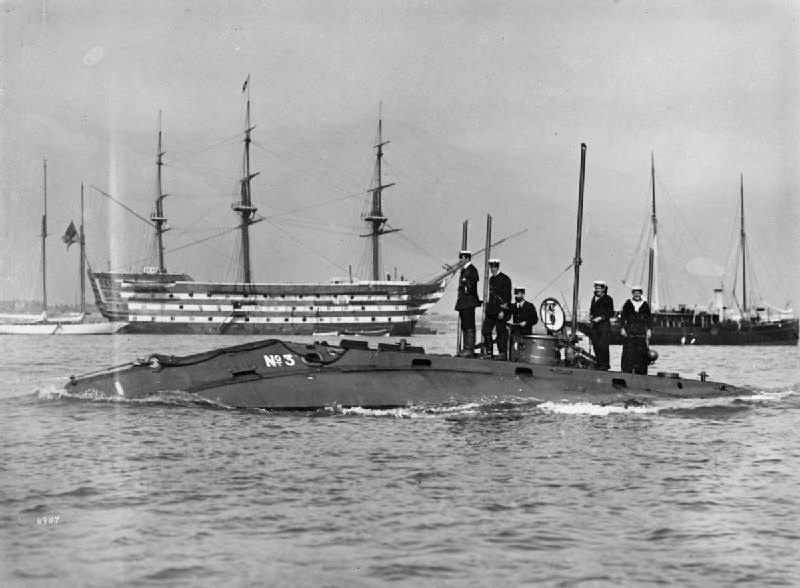
The decades leading up to the First World War saw the Royal Navy, under John Fisher, introduce various new types of weaponry. Among these innovations was the submarine, which became operational in 1901. The speed of its development following its introduction—due in part to Fisher’s continued support—was remarkable. What began as an experimental vessel quickly evolved into a powerful weapon, playing a key role in the Royal Navy’s strategy.
Historical background:
The concept of a submersible ship is actually centuries old. William Bourne, a British mathematician and writer on naval subjects, proposed early ideas for a craft that could operate beneath the waves. However, Bourne never constructed his submarine. That honor went to the Dutchman Cornelis Drebbel, who successfully navigated his vessel four to five meters below the surface of the Thames and reportedly even gave King James I a short ride.
The first true submarine, in the modern technological sense, is credited to Nathaniel Symons. He developed and built the first vessel capable of submerging using a ballast tank—goatskin bags filled with water for submersion, which were then emptied to resurface. However, the concept of the submarine remained largely speculative and received little attention from the Admiralty.
The Americans were the first to attempt using a submarine as an offensive weapon during the American Revolution, though the effort ultimately failed. A notable pioneer was the American inventor Robert Fulton, who is credited with successfully sinking another vessel for the first time during a test using his experimental submarine, the Nautilus. Despite its potential, Fulton died before he could construct a larger, steam-powered version submarine.
Further advancements occurred during the American Civil War, when the Confederate States sought to counter the Union Navy’s superiority by investing in experimental vessels, including submarines. The H.L. Hunley became the first submarine to successfully sink an enemy ship in combat, though it was lost in the process. Meanwhile, the French advanced submarine technology with the launch of the Plongeur in 1863, the first submarine not reliant on human power for propulsion.
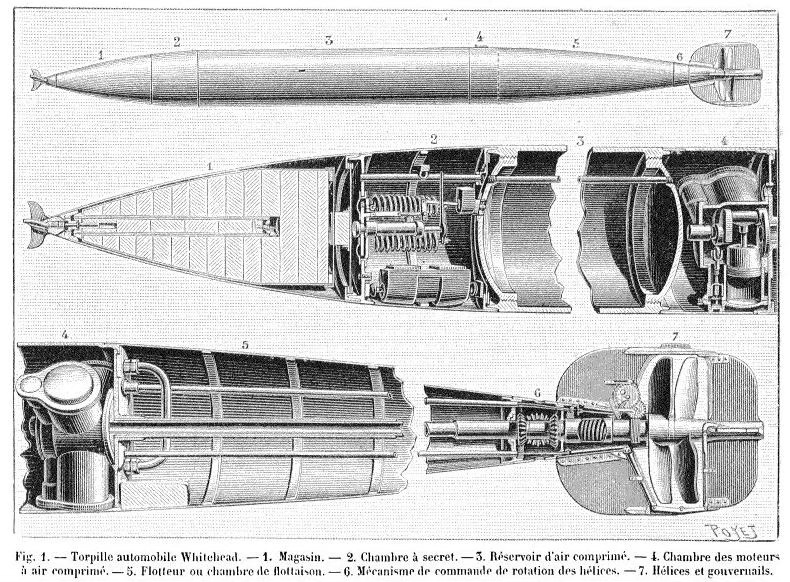
The invention that made the submarine a viable assault weapon was the Whitehead torpedo, designed in 1866 by Robert Whitehead. It was the first self-propelled torpedo, replacing the earlier concept of the spar torpedo—a bomb mounted on the end of a long pole and driven into an enemy vessel by the submarine
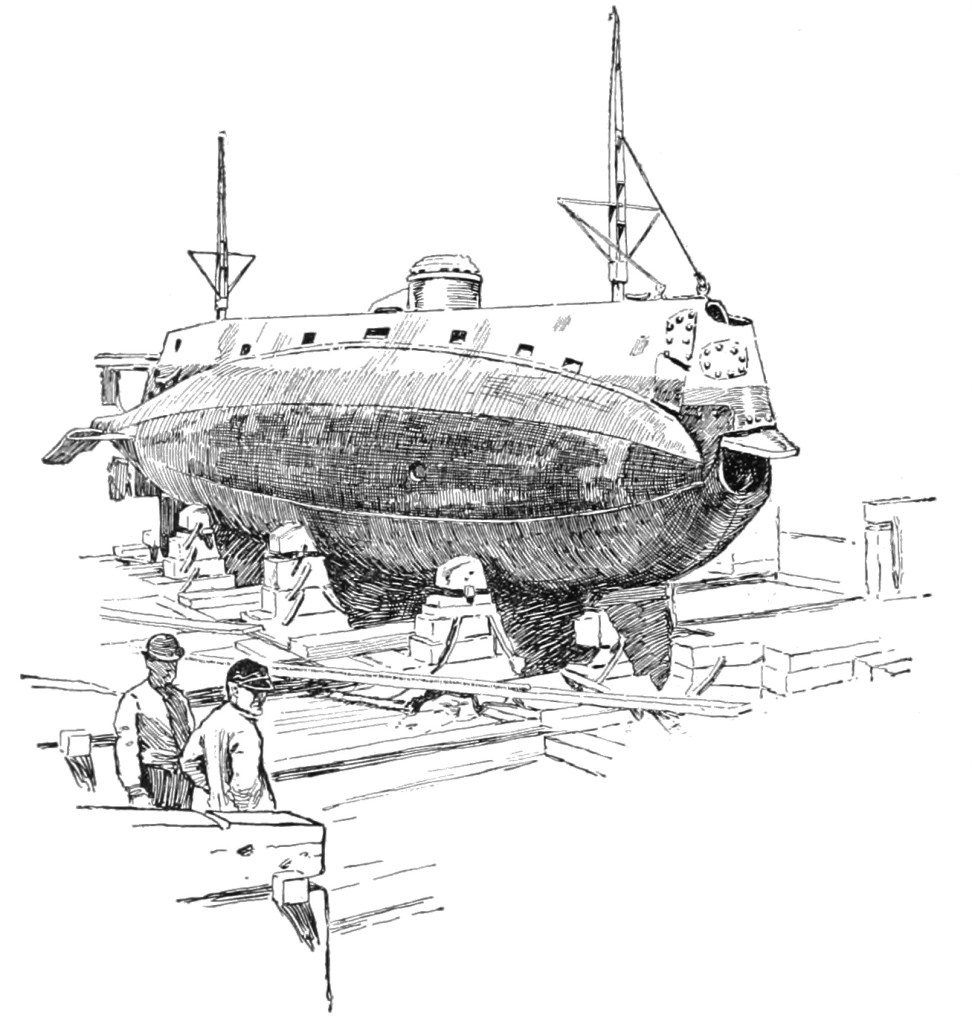
The first significant steps toward developing a combat-ready submarine were taken by inventor George Garrett and Swedish industrialist Thorsten Nordenfelt. Together, they constructed the first steam-powered submarine equipped with torpedoes: the Nordenfelt I in 1885, a 56-tonne, 19.5-meter (64 ft) vessel that was sold to the Greek Navy.
A critical advancement in submarine development was the invention of a reliable electric battery for underwater propulsion. This milestone was achieved in the 1880s with the launch of the Spanish submarine Peral, the first fully electric-powered submarine armed with torpedoes. It is often celebrated as the first truly combat-ready submarine. The concept was later refined by the French with the Narval, which introduced the double-hull design—featuring a pressure hull within an outer hull—for enhanced durability and performance.
The First Submarines of the Royal Navy:
The Irish inventor John Philip Holland played a pivotal role in the development of the submarine as an effective and reliable naval unit. In 1896, he designed the Holland VI submarine, the first to feature an internal combustion engine for surface propulsion and an electric battery for underwater operation. It was also the first submarine capable of cruising significant distances. Launched on May 17, 1897, at Navy Lt. Lewis Nixon’s Crescent Shipyard in Elizabeth, New Jersey, the vessel was acquired by the United States Navy on April 11, 1900, becoming the Navy’s first commissioned submarine, officially named USS Holland.
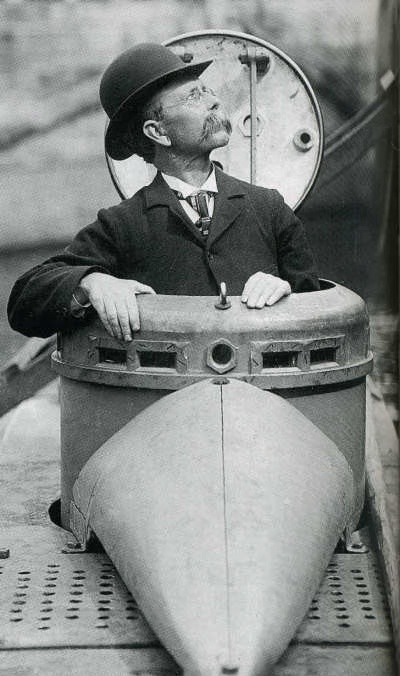
By 1900, the Admiralty realized that other nations were advancing in submarine technology and decided to catch up. Although the British were aware of the submarine’s destructive potential, they had initially refrained from developing their own, hoping that their restraint would discourage other nations from pursuing such vessels. Another reason for the Royal Navy’s lack of initiative was the Admiralty’s disdain for the concept of an “unseen attacker,” dismissing it as “ungentlemanly.” This perspective proved to be a miscalculation, as many other countries were actively designing and building submarines. A key advocate for the establishment of a submarine service was John Fisher, who remarked in 1903:
“In their inception, they were the weapons of the weak. Now they loom large as the weapons of the strong” (quote sourced from Iain Ballantyne).
Consequently, five submarines were ordered in 1900 from Vickers Shipbuilding and Engineering at Barrow-in-Furness. The following year, the first unit, Holland 1, was launched. This vessel was designed by John Philip Holland. Four additional submarines of the Holland class were constructed, with two of them following Holland’s design. Among these, Holland 4 was unique as the only submarine in the class to feature a conning tower. They could attain a speed of 7 knots under water and carried a mere 2 torpedoes to be fired from a 14-inch torpedo tube. 8 men were needed to operate the vessels.
The Submarine Service, led by the technically adept Reginald Bacon as Inspecting Captain of Submarines, was established to operate the Royal Navy’s new submersible units, initially recruiting six officers. While the Holland-class submarines were intended primarily for testing, they were nearly deployed against the Russians after the 1904 Dogger Bank Incident, during which the Russian fleet mistakenly attacked and sank British fishing vessels. Today, Holland 1 is preserved and displayed at the Royal Navy Submarine Museum in Gosport.
The Holland-class submarines and their successors proved to be invaluable assets to the Royal Navy in the years leading up to the First World War. They were employed in training exercises as simulated attackers, giving the fleet crucial experience in countering submarine threats. This preparation provided the British with a vital edge, offering them some insight into what to anticipate—a foresight that became critical when Germany’s submarine service later emerged as Britain’s primary naval adversary.
Early submariners faced tremendous dangers. Their small, fragile craft were highly susceptible to accidents, with collisions, petrol explosions, and flooding claiming many lives. Before World War I, 90 ratings and 18 officers perished in submarine service. Winston Churchill, who served twice as First Lord of the Admiralty, captured their courage, stating:
“Of all the branches of men in the forces, there is none which shows more devotion and faces grimmer perils than the submariners. Great deeds are done in the air and on the land; nevertheless, nothing surpasses your exploits.”
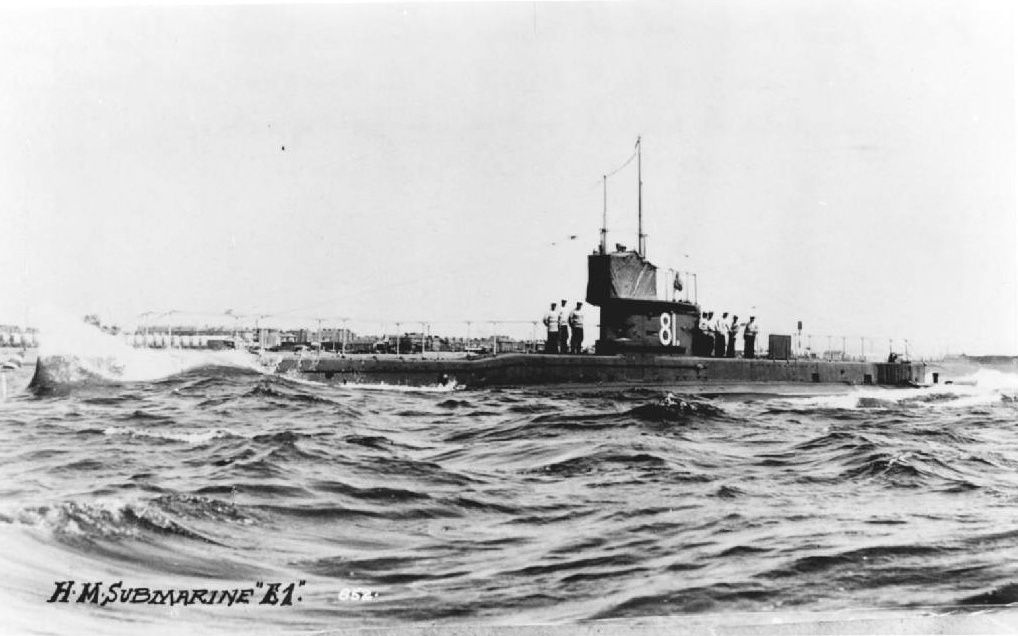
By the outbreak of WWI, Britain had a formidable submarine force: 62 submarines, manned by 168 officers and 1,250 ratings. The latest submersible units of the fleet had advanced significantly since the Holland-class. For example, the famed E-class submarine could reach 15 knots on the surface and around 10 knots submerged, and it was equipped with four to five 18-inch torpedo tubes. How did the submarine service fare in the Great War? That is a story for another day.
Olivier Goossens
 Heart of Oak
Leave a comment