

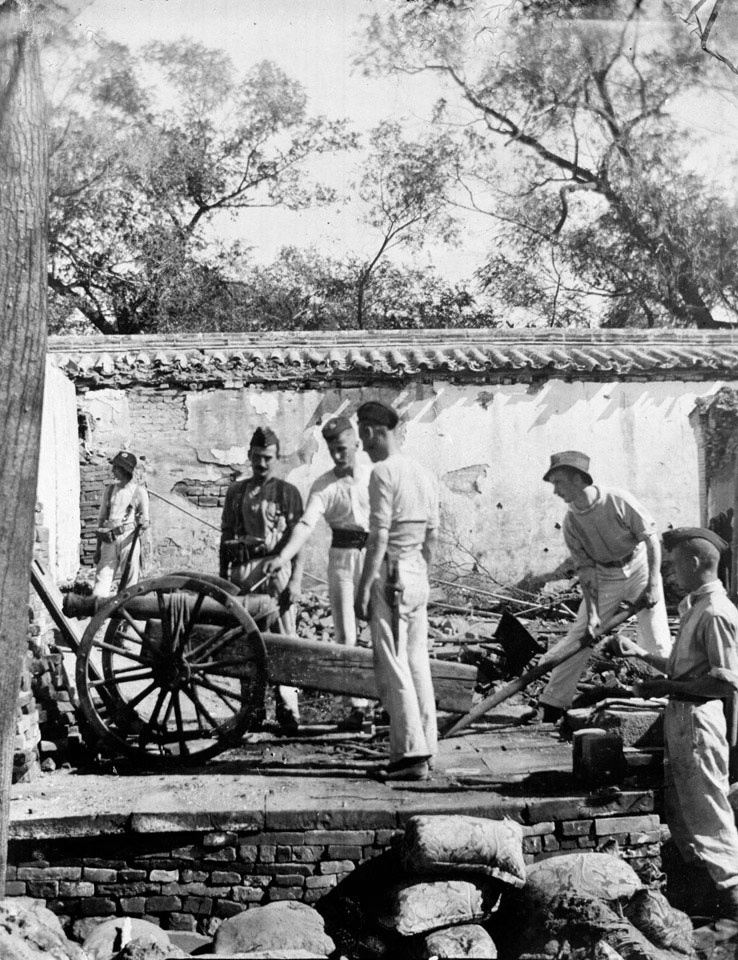
The Boxer Rebellion was a Chinese nationalist movement that aimed to remove all christian and foreign influence from China. This prompted the formation of the Eight-Nation Alliance, with the British Empire as one of its members. The alliance sought to suppress the rebellion and restore the Western-dictated order in China. Britain sent its most lethal weapon to the war zone: the Royal Navy.
The armored cruiser HMS Terrible was one of the ships Britain deployed to China. However, Captain Percy Scott persuaded the Admiralty to allow him to first pass through South Africa, where war against the Boer republics seemed imminent. Indeed, war broke out in the same year as the start of the Boxer Rebellion. Percy Scott gained notoriety in South Africa by detaching 4.7-inch and 12-pounder guns from his ships and deploying them on land using specially designed carriages. This initiative, initially met with suspicion, proved to be a great success, as the British artillery quickly outmatched and outranged the Boer guns.
After being appointed a Companion of the Order of the Bath, Captain Scott was ordered to proceed to China with HMS Terrible to assist the beleaguered allied forces there. Once again, he ordered the ship’s guns to be dismounted and deployed on land. His artillery played a crucial role in the relief of Tientsin in July 1900.
Meanwhile, further inland, the diplomats of Western powers in the so-called Legation Quarter in Peking were also besieged by the Chinese rebels since 20 June. An earlier relief attempt by 2,000 Royal Marines and sailors under the command of Admiral Edward Seymour in late June had failed, and the Legation Quarter anxiously awaited another attempt by the Eight-Nation Alliance.
At Peking, small detachments from various countries held off the Chinese attackers, including the Royal Marines of the Royal Marine Light Infantry. In total, 76 Royal Marines and 3 officers were defending the Legation Quarter. The heaviest fighting during the siege occurred in July, with the Royal Marines participating in a sortie against the Chinese near the American barricade. In addition to regular combat, the British were tasked with clearing mines that the rebels had been planting beneath the legations. Notably, a bomb planted under the British legation was defused in time, averting disaster. The Conspicuous Gallantry Medal was awarded to Corporal Preston RMLI for his bravery on the 14th of July, when he, in cooperation with an American gunner named Mitchell, was able to hold the enemy at bay by the barricade on the Imperial Carriage Park Wall, and capture a banner of the “boxers”, thus inflicting a symbolic defeat upon the attackers.
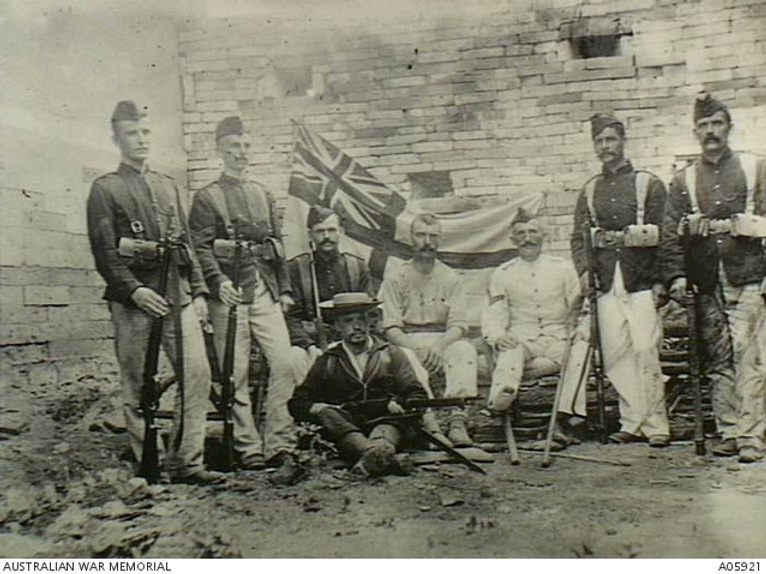
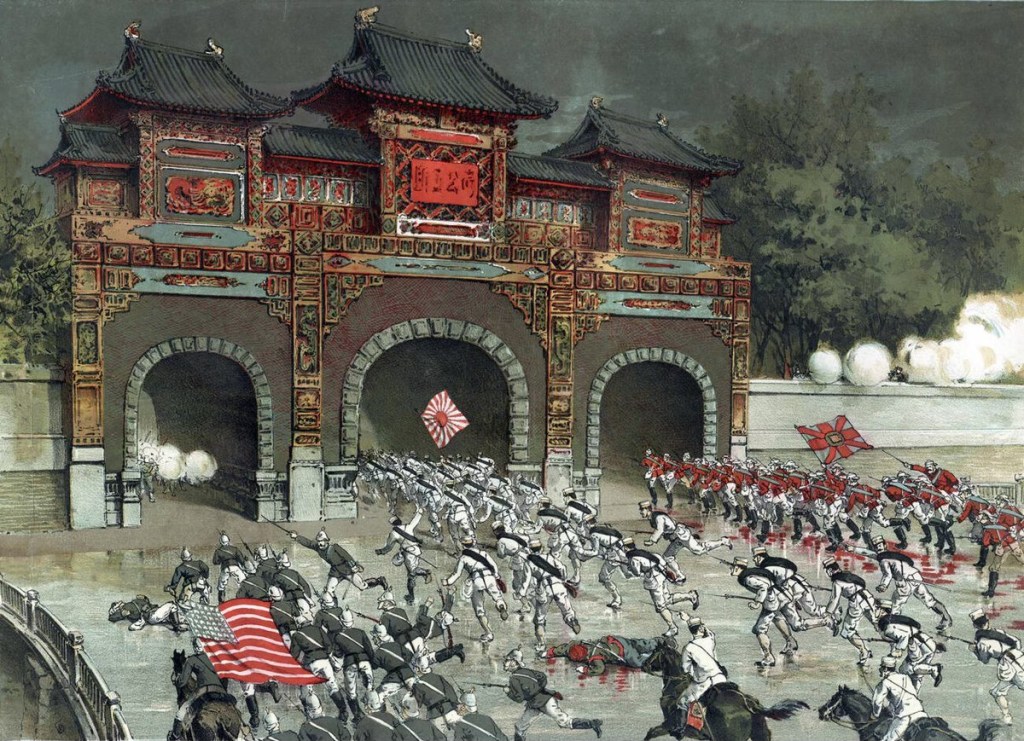
After news of the successful relief of Tientsin had reached Peking, the Chinese rebels redoubled their efforts to capture the settlement on July 19th. Fortunately for the British and their allies, the relief column from Tientsin arrived in August and soon made its presence known with artillery fire. The British detachment of the relief force consisted of the previously mentioned “naval brigade” led by Percy Scott and his heavy guns. The rest of the British imperial forces were primarily made up of Indian troops, who valiantly contributed to the final victory. By August 13, the Japanese, American, Russian, and British forces were all in place to commence the final assault on Peking. On August 14, the final assault began. The battle lasted until the next day, and the Legation Quarter was finally freed. The besieged Royal Marines and Percy’s “naval brigade” once again demonstrated the priceless flexibility of the Royal Marines and the Royal Navy, capable of serving British interests in a wide variety of situations.
Olivier Goossens
 Heart of Oak
Leave a comment