

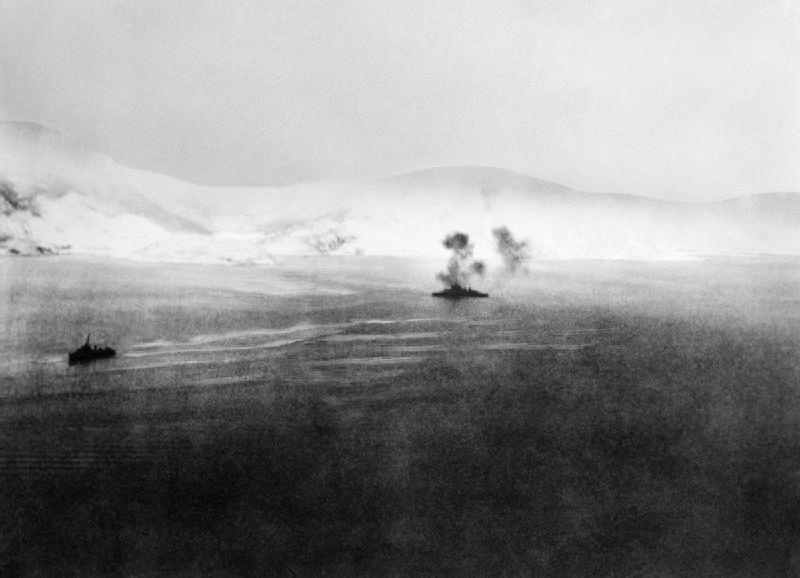
Narvik, an important Norwegian port used by the Germans to export Swedish iron ore to Nazi Germany, became the site of a significant battle fought on land and at sea between April and June 1940. Although the battle was an Allied victory, with the German navy being crushed by the British and their troops pushed back to the Swedish border, the Wehrmacht ultimately prevailed following the Allied evacuation of Norway in June 1940.
The naval side of the battle: On 9 April 1940, ten German destroyers under the command of Kommodore Friedrich Bonte arrived at Narvik, landing 2,000 troops. The British had laid mines near the port a day earlier but had not anticipated a German occupation. A British destroyer flotilla under Captain Bernard Warburton-Lee launched an attack on 10 April. Using stealth and heavy snow as cover, five British destroyers entered Narvik harbor, sinking two German destroyers and six merchant ships. Kommodore Bonte was killed in action. However, five German destroyers from nearby fjords counterattacked, killing Warburton-Lee, destroying two British destroyers, and heavily damaging another. Four German destroyers were also damaged.
On April 10, 1940, Vice-Admiral William Whitworth, commanding HMS Penelope and several destroyers, postponed another attack on Narvik until reinforcements arrived. Reports suggested the Germans had two light cruisers and six destroyers. Captain Erich Bey, the new commander of the German destroyer flotilla, planned a breakthrough with all combat-ready destroyers. However, only two ships, the Wolfgang Zenker and the Erich Giese, were ready to sail. On the night of April 10, these two destroyers attempted to leave Narvik but turned back after encountering superior British forces. By April 11, Bey had four operational destroyers. Navigational hazards plagued both sides, damaging several ships, including the British cruiser Penelope. Bey shifted to preparing a defensive stance at Narvik. On April 12, aircraft from HMS Furious bombed Narvik, damaging the Erich Koellner and sinking three captured Norwegian patrol vessels. Bey anticipated a British attack on April 13, positioning his remaining destroyers for a last stand in Narvik and Ofotfjord.
On April 13, Vice-Admiral Whitworth, aboard HMS Warspite, led nine destroyers into Narvik. Warspite’s aircraft scouted German positions, sinking U-64 and marking the first submarine destroyed by aerial attack during WWII. The Koellner was torpedoed and sunk. Whitworth’s force then engaged the German destroyers Kuinne, Lüdemann, Zenker, and Armin, destroying all four. The remaining German destroyers were pursued through the fjords by HMS Eskimo, HMS Bedouin, HMS Forester, HMS Hero, and HMS Icarus. HMS Eskimo sustained significant damage from the Theile, which was eventually run aground and capsized. Of the German forces at Narvik, only the submarine U-51 managed to escape to open sea.
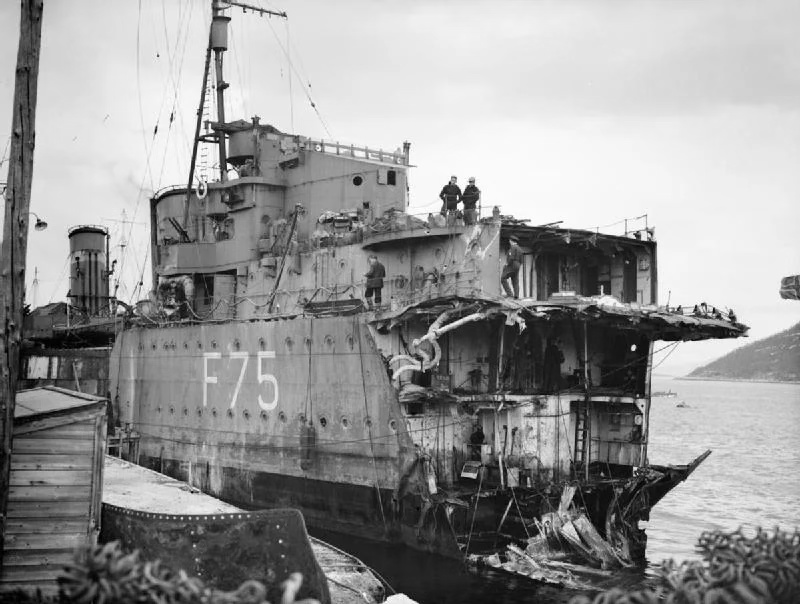
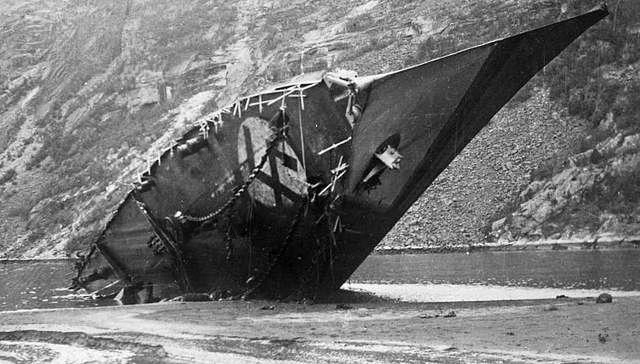
The Second Battle of Narvik ended with a decisive British victory. The Germans lost all their destroyers and one U-boat, but their surviving crews formed a marine detachment of 2,600 men, supporting General Dietl’s forces in defending Narvik.
Olivier Goossens
 Heart of Oak
Leave a comment